Full Spectrum Power
Lithium Lightweight Lithium Motorcycle Batteries
Pulse IPT Lithium Batteries and P. Motive
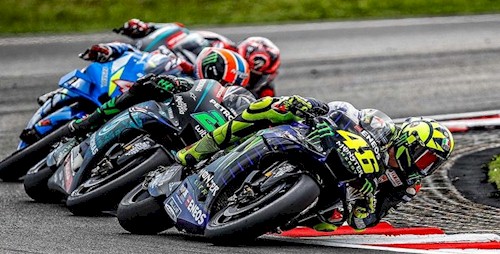
When championships are on the line, and performance is the only thing that
matters, Full Spectrum Power lithium motorcycle batteries are the only choice.
Our batteries are designed with one goal in mind: winning.
Our fanatical attention to performance has helped our customers win more
championships in motorcycle racing than all other lightweight battery companies
combined.
The same exact battery that powers Ryan Dungey's KTM, Kenan Sofuoglu's Kawasaki,
and HTP Performance's Suzuki is available to you here.
No compromise- just performance.
The Pulse IPT is the worlds best lightweight lithium motorcycle battery. With
the emergency start capability of the IPT Reset, you will never get stranded by
a dead battery again.
All Pulse IPT batteries all have the following features:
* IPT Battery Management System (BMS) - Every Pulse IPT battery comes with an
integrated BMS which controls the function and behavior of the battery. This
means better performance, longer life, and emergency start capability.
* IPT Reset – Intelligent Pulse Technology does two things:
1. Leave the key in the “on” position for a few months? Press the IPT Reset
button, and you will be able to start your bike. You will need to recharge your
battery by either riding the bike, or putting it on a charger- but there will be
enough power to start your bike once.
2. It will prevent the battery from being drained, and damaged beyond repair.
Lithium batteries can be damaged beyond repair if they are drained below 12
volts. The IPT will prevent this from happening.
* Universal Charger Capability - Most commercially available battery chargers
work with the Pulse IPT batteries.
*Advanced Case Design- Lighter and stronger than our previous case, it rejects
heat, vibration, gas and oil.
*Advanced Cell Design- We designed the Pulse IPT cells to cope with the demands
of motorsports. Every component of our cells were designed and optimized for
motorsports, based on a decade of experience building engine start batteries.
These are only available from Full Spectrum Power.
* V Direct Multi Terminal - Our solid copper terminals have 4 threaded mount
holes. Attach your accessory wires without having to use long screws on one
small terminal.
* V Sleeve Silicon Terminal Covers - Color coded for polarity, our silicon
terminal covers protect against short circuits.
Every Pulse IPT battery comes with our Intelligent Pulse Technology, and the IPT
Reset feature. Years in development, every feature of the Pulse IPT series of
battery was conceived, designed, and created with one goal in mind: to be the
most user friendly, reliable, long lasting, best performing battery ever built.
MODEL
PIC
AMP HR /
CRANKING AMPS
Dimensions
W x D x H
Approx
Weight lbs
OEM DIRECT FIT EQUIVALENT
SALE PRICE
P.1
IPT5.1
2.5 / 160
4.4" X 1.6" X 3.1"
1.0
YT4B-BS, YB7B-B
$199
Free Shipping
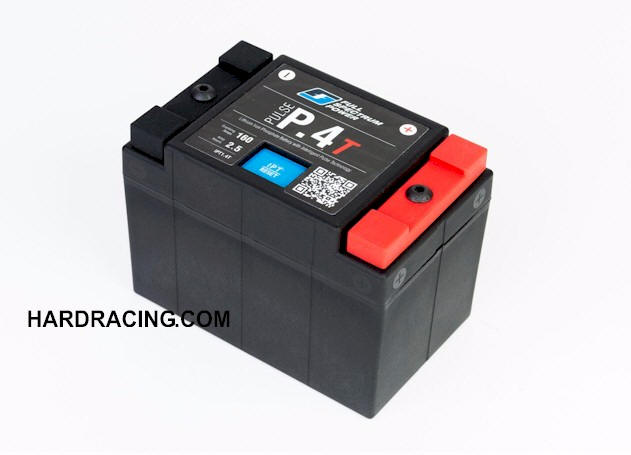
P.4T
IPT1.4T
2.5 / 160
4.4" X 2.8" X 3.3"
1.5
YTX4L-BS, YTZ5S
$139
Free Shipping
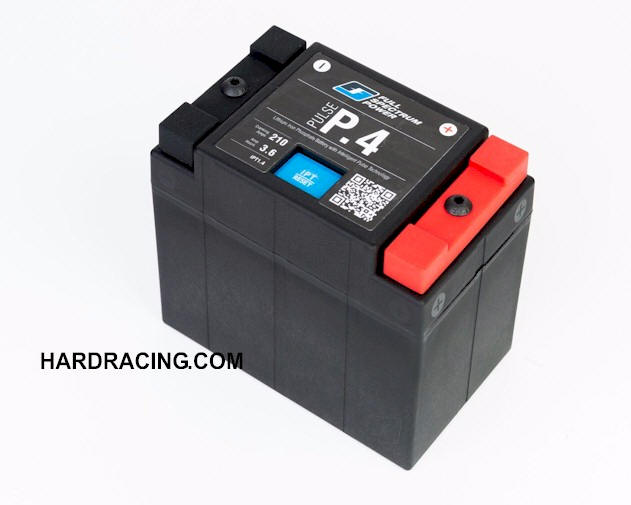
P.4
IPT1.4
3.6 / 210
4.4" X 2.8" X 3.3"
1.7
YTX4L-BS , YTZ5S
$179
Free Shipping
P.5T
IPT1.5T
2.5 / 160
4.4" X 2.8" X 3.7"
1.6
YB4L-B
$139
Free Shipping
P.5
IPT1.5
3.6 / 210
4.4" X 2.8" X 3.7"
1.8
YB4L-B
$179
Free Shipping
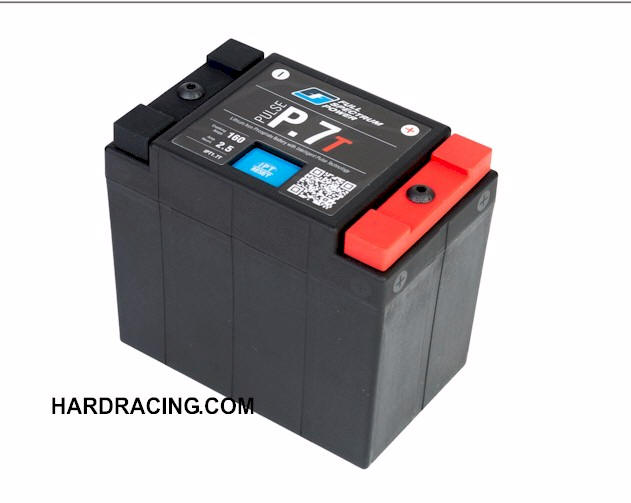
P.7T
IPT1.7T
2.5 / 160
4.4" X 2.8" X 4.2"
1.6
YTX7L-BS, YTX5L-BS, YTZ7S
$169
Free Shipping
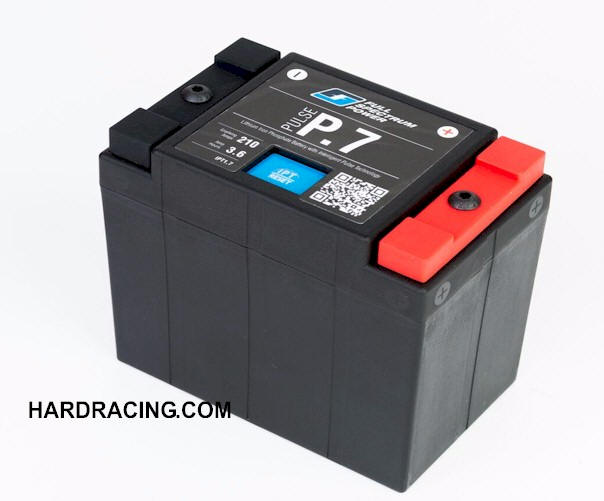
P.7
IPT1.7
3.6 / 210
4.4" X 2.8" X 4.2"
1.8
YTX7L-BS, YTX5L-BS, YTZ7S
$179
Free Shipping
P.7S
IPT1.7S
7.2/420
4.4" X 2.8" X 4.2"
2.8
YTX7L-BS, YTX5L-BS, YTZ7S
$239
Free Shipping
P.7BT
IPT2.7BT
2.5 / 160
5.9" X 2.6" X 3.7"
1.9
YT7B-BS
$139
Free Shipping
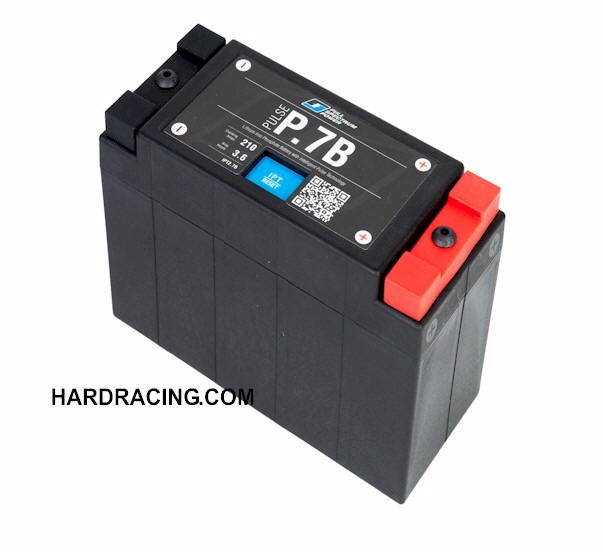
P.7B
IPT2.7B
3.6 / 210
5.9" X 2.6" X 3.7"
2.0
YT7B-BS
$179
Free Shipping
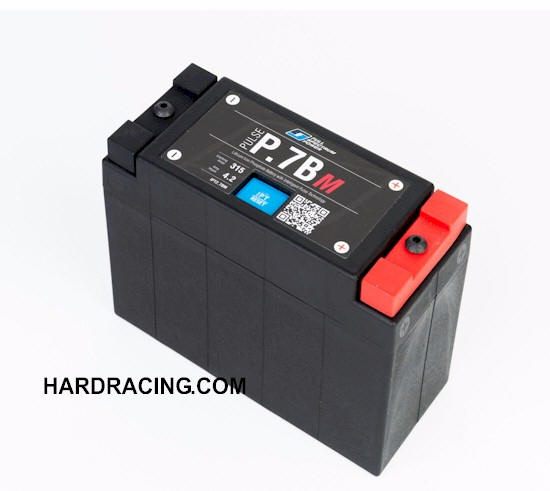
P.7BM
IPT2.7BM
4.2 / 315
5.9" X 2.6" X 3.7"
2.1
YT7B-BS
$209
Free Shipping
P.9BT
IPT2.9T
2.5 / 160
5.9" X 2.6" X 4.1"
1.8
YT9B-BS
$139
Free Shipping
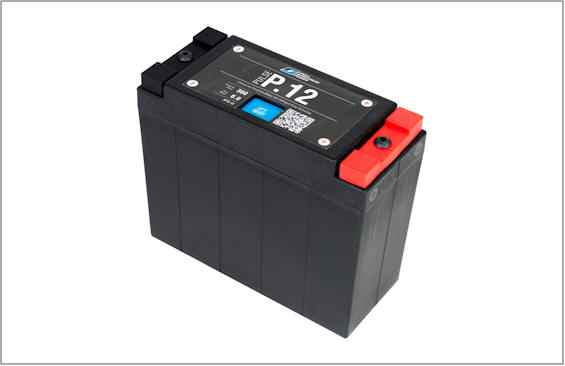
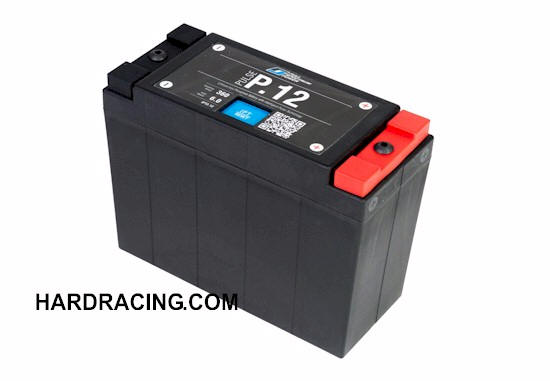
P.12
IPT2.12
3.6 / 210
5.9" X 2.6" X 5.1"
2.1
YT12B-BS, YTX12-BS, YT14B-BS
$169
Free Shipping
P.12L
IPT2.12L
6. / 360
5.9" X 2.6" X 5.1"
2.7
YT12B-BS, YTX12-BS, YT14B-BS
$229
Free Shipping
P.12S
IPT2.12S
8.4 / 630
5.9" X 2.6" X 5.1"
3.7
YT12B-BS, YTX12-BS, YT14B-BS
$309
Free Shipping
P.9T
IPT3.9T
2.5 / 160
5.9" X 3.4" X 3.7"
1.8
YTZ10S, YTX7A-BS
$139
Free Shipping
P.9
IPT3.9
3.6 / 210
5.9" X 3.4" X 3.7"
2.1
YTZ10S, YTX7A-BS
$179
Free Shipping
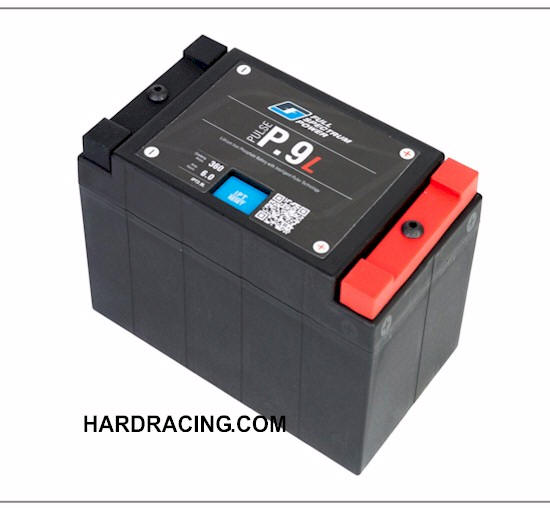
P.9L
IPT3.9L
6 / 360
5.9" X 3.4" X 3.7"
2.6
YTZ10S, YTX7A-BS
$229
Free Shipping
P.9S
8.4/630
5.9" X 3.4" X 3.7"
3.5
YTZ10S, YTX7A-BS
$309
Free Shipping
P.10T
IPT3.10T
2.5 / 160
5.9" X 3.4" X 4.2"
1.9
YT12A-BS, YTX9-BS, YTZ12S, YTZ14S
$139
Free Shipping
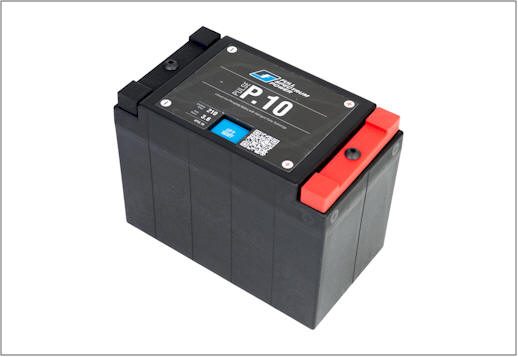
P.10
IPT3.10
3.6 / 210
5.9" X 3.4" X 4.2"
2.1
YT12A-BS, YTX9-BS, YTZ12S, YTZ14S
$244
Free Shipping
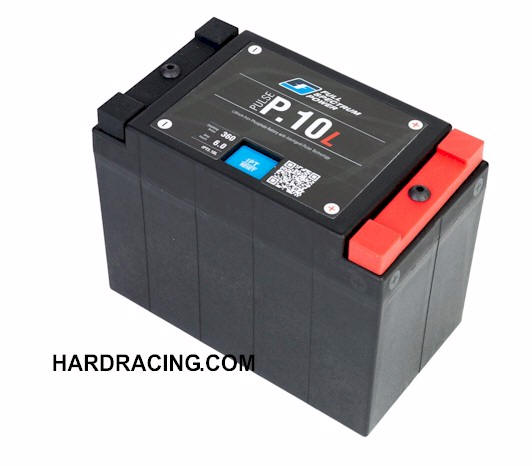
P.10L
IPT3.10L
6 / 360
5.9" X 3.4" X 4.2"
2.8
YT12A-BS, YTX9-BS, YTZ12S, YTZ14S
$229
Free Shipping
P.10S
IPT3.10S
12 / 720
5.9" X 3.4" X 4.2"
4.3
YT12A-BS, YTX9-BS, YTZ12S, YTZ14S
$339
Free Shipping
P.12XL
IPT3.12XL
6 / 360
5.9" X 3.4" X 5.1"
2.9
YTX12-BS
$229
Free Shipping
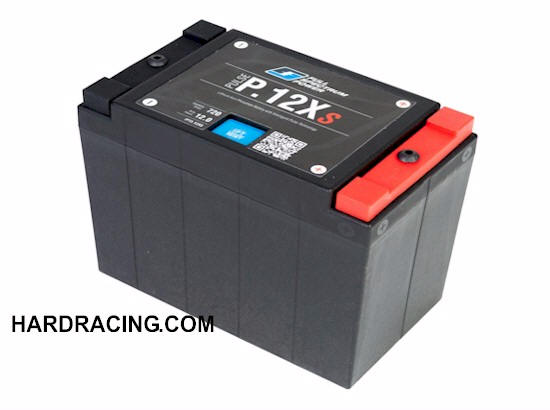
P.12XS
IPT3.12XS
12 / 720
5.9" X 3.4" X 5.1"
4.4
YTX12-BS
$319
Free Shipping
P.14
IPT3.14
3.6 / 210
5.9" X 3.4" X 5.7"
2.2
YTX14, YTX14-BS, GYZ16H
$169
Free Shipping
P.14L
IPT3.15L
6 / 360
5.9" X 3.4" X 5.7"
2.9
YTX14, YTX14-BS, GYZ16H
$229
Free Shipping
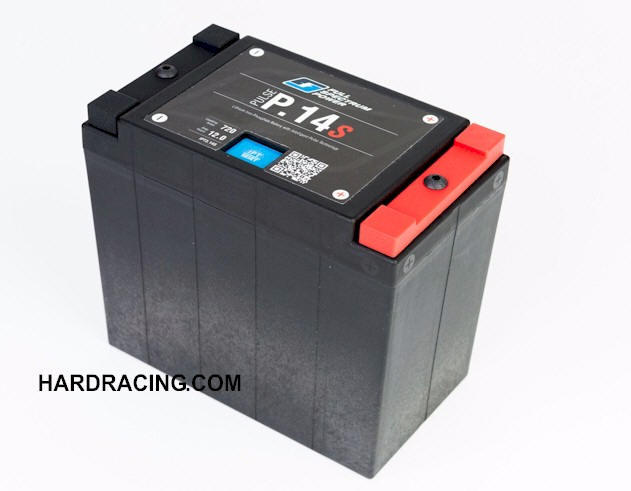
P.14S
IPT3.14S
12 / 720
5.9" X 3.4" X 5.7"
4.5
YTX14, YTX14-BS, GYZ16H
$319
Free Shipping
P.16
IPT3.16
3.6 / 210
5.9" X 3.4" X 6.3"
2.3
YTX16-BS,YTX20CH-BS, YIX30L-BS
$169
Free Shipping
P.16L
IPT3.16L
6 / 360
5.9" X 3.4" X 6.3"
3.0
YTX16-BS, YTX20CH-BS, YIX30L-BS
$229
Free Shipping
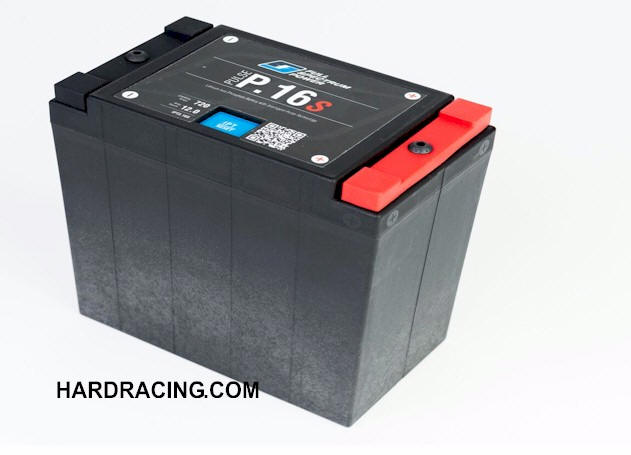
P.16S
IPT3.16S
12 / 720
5.9" X 3.4" X 6.3"
4.5
YTX16-BS, YTX20CH-BS, YIX30L-BS
$299
Free Shipping
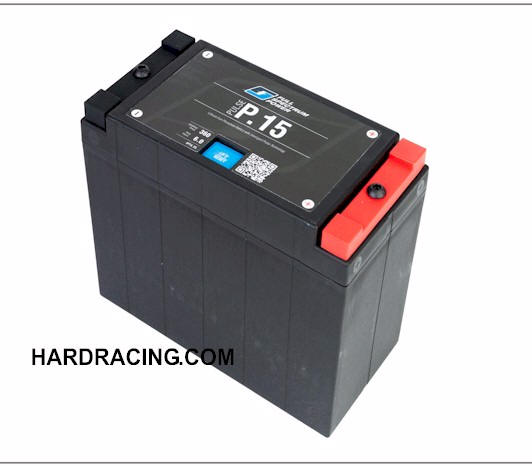
P.15
IPT4.15
3.6 / 210
6.9" X 3.4" X 5.1"
2.5
YTX15L-BS
$169
Free Shipping
P.15L
IPT4.15L
6 / 360
6.9" X3.4" X 5.1"
2.9
YTX15L-BS
$229
Free Shipping
P.15S
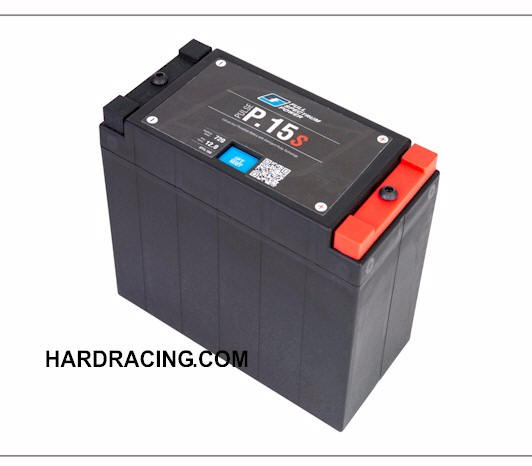
IPT4.15S
12 / 720
6.9" X 3.4" X 5.1"
4.4
YTX15L-BS
$309
Free Shipping
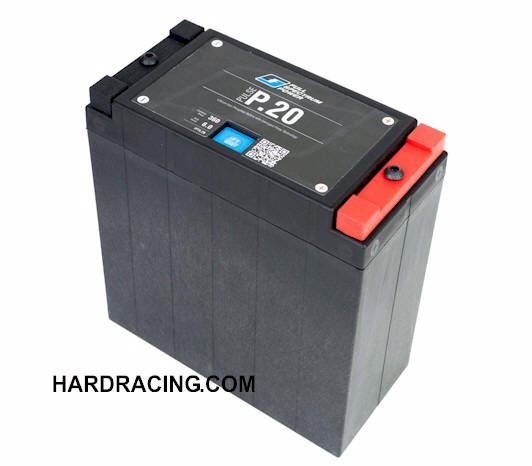
P.20
IPT4.20
3.6 / 210
6.9" X 3.4" X 6.1"
2.5
YTX20-BS, YTX20L, YTX24HL-BS
$169
Free Shipping
P.20L
IPT4.20
6 / 360
6.9" X 3.4" X 6.1"
3.0
YTX20-BS, YTX20L, YTX24HL-BS
$229
Free Shipping
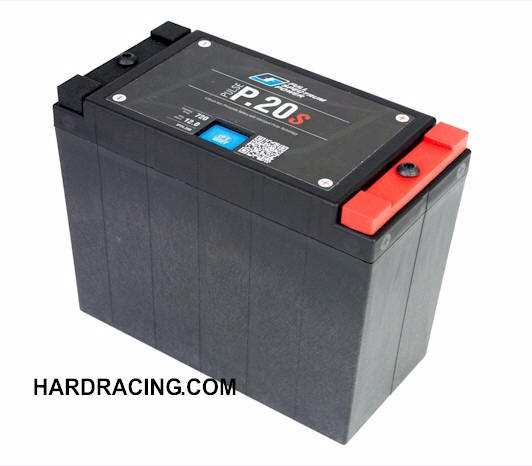
P.20S
IPT4.20S
12 / 720
6.9" x 3.4" x 6.1"
4.5
YTX20-BS, YTX20L, YTX24HL-BS
$319
Free Shipping
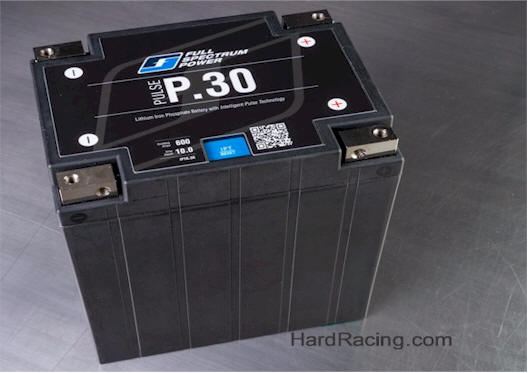
P.30
IPT6.30
10/600
6.6" x 5" x 6.4"
4.9
YIX30L-BS
$379
Free Shipping
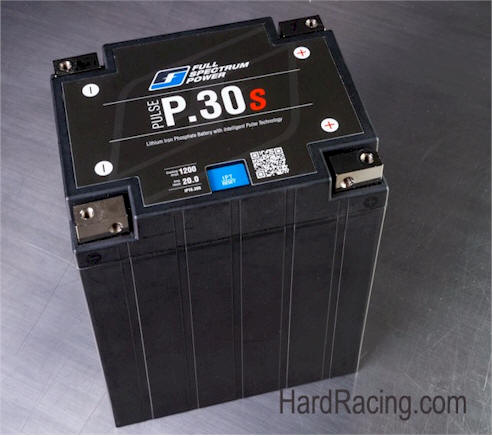
P.30S
IPT6.30S
20/1200
6.6" x 5" x 6.4"
7.5
YIX30L-BS
$679
Free Shipping
P.MOTIVE 16 V BATTERIES
MODEL
PIC
AMP HR /
CRANKING AMPS
Dimensions
W x D x H
Approx
Weight lbs
OEM DIRECT FIT EQUIVALENT
SALE PRICE
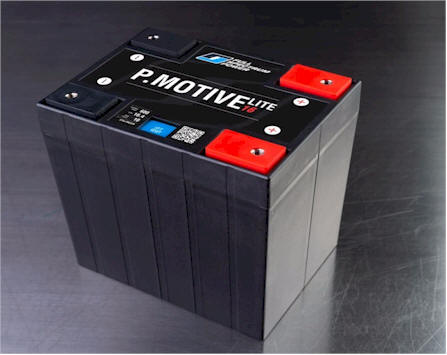
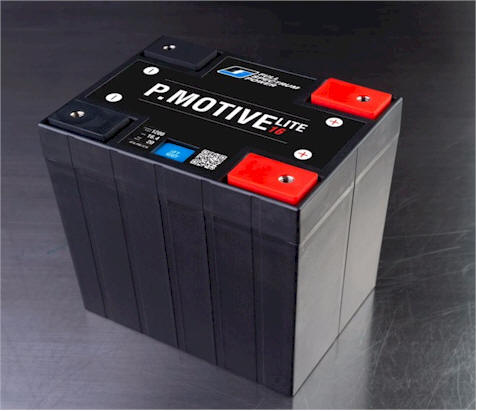
P.MOTIVE LITE
16V 600
IPT6.PML616
10/600
6.6 x 5 x 6.4in
5
YIX30L-BS
$929
Free Shipping
P.MOTIVE LITE
16V 850
IPT6.PML816
12/850
6.6 x 5 x 6.4in
6
YIX30L-BS
$979
Free Shipping
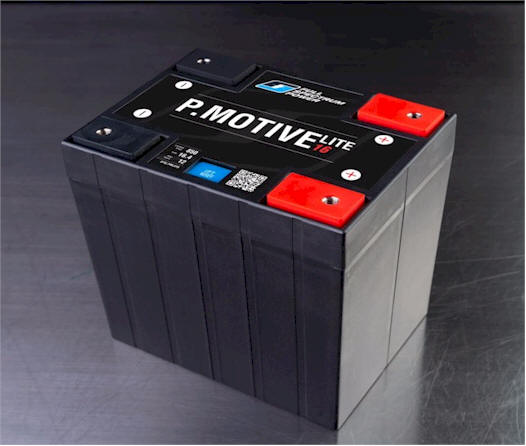
P.MOTIVE LITE
16v 1200
IPT6.PML1216
20/1200
6.6 x 5 x 6.4in
7.7
YIX30L-BS
$599
Free Shipping
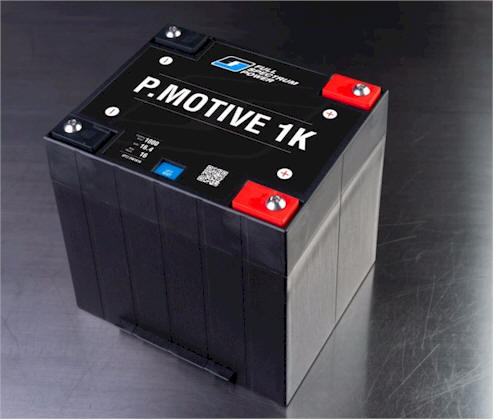
P.MOTIVE 1K
16V
IPT7.PM1K16
16/1000
8.1 x 6.8 x 7.2in
6.5
$929
Free Shipping
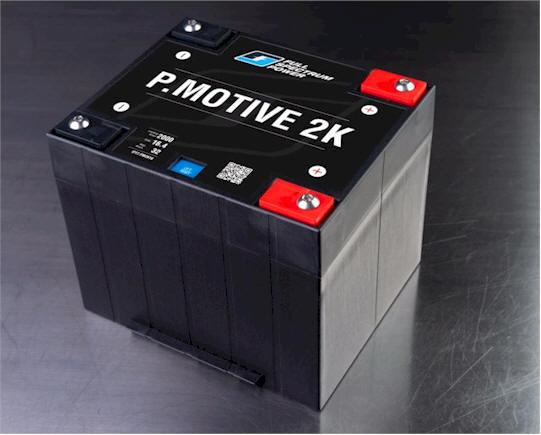
P.MOTIVE 2K
16v
IPT7.PM2K16
32/2000
8.1 x 6.8 x 7.2in
11.5
$1429
Free Shipping
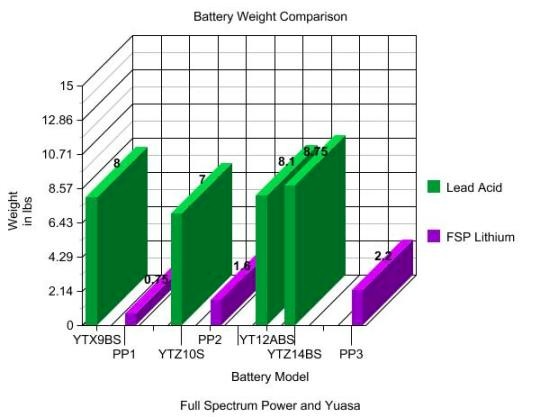
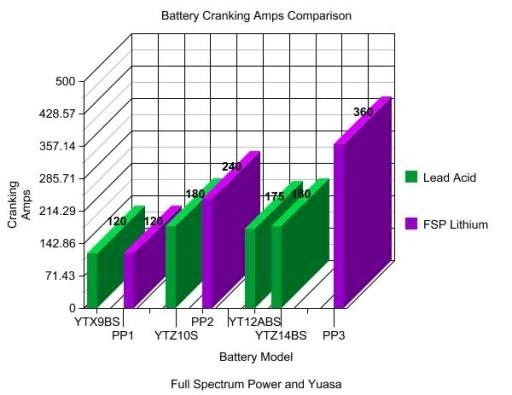
Lightweight Battery Comparison Chart
These charts offer a direct comparison between Full Spectrum Power Lithium
lightweight
lithium batteries and standard lead-acid batteries. For an exact comparison,
look at the specifications listed on the side of your stock battery, and compare
them with the specifications listed on our products page.